
Back-EMF rises with speed
As motor RPM increases, Back-EMF opposes the supply voltage and reduces usable voltage headroom.
VAC is a modular power-electronics architecture designed to help EV drivetrains maintain usable DC-link voltage when Back-EMF rises and torque demand becomes harder to support.
VAC addresses a specific powertrain behavior: as speed and demand rise, the inverter needs enough voltage headroom to keep current available. Without that headroom, torque can collapse.
As motor RPM increases, Back-EMF opposes the supply voltage and reduces usable voltage headroom.
When available voltage can no longer overcome demand, current flow weakens and torque production drops.
VAC is designed to inject additional voltage during demanding conditions to support sustained motor operation.
The architecture uses a base power conversion path with modular VAC stages that can be scaled conceptually as voltage requirements increase. This public view explains the platform logic without exposing confidential implementation detail.
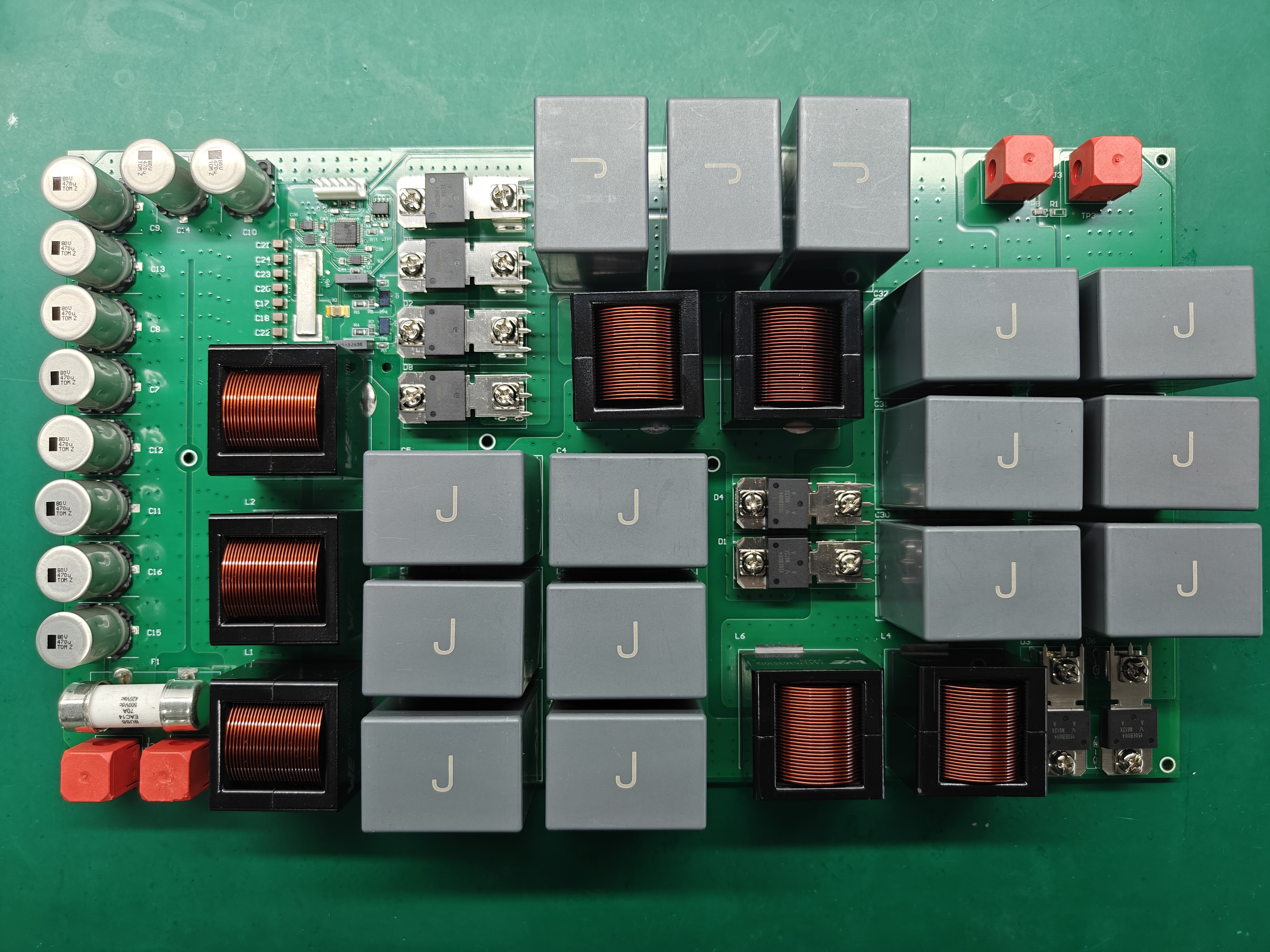
VAC is no longer only a simulation narrative. The current 3.2 kW class prototype hardware is ready, with the next 5 kW platform under development. Public pages show proof of hardware progress while protecting sensitive implementation detail.
Full design files and deeper validation material should remain inside the screened data room, not on the public website.
VAC uses a proprietary arrangement of inductors, capacitors, and diodes within a modular voltage-adding architecture. The exact circuit configuration, component count, interconnections and operating sequence remain proprietary.
VAC is not positioned as a decorative add-on. Its purpose is to reduce voltage headroom stress during the operating conditions where EV drivetrains can lose speed capability and torque.
Voltage ceiling reached earlier
Current drops at high RPM
Torque output falls
Additional voltage headroom
Lower duty-cycle pressure
More stable high-demand operation
Public pages remain intentionally schematic-safe. Investors, collaborators, and technical reviewers can request deeper documents through a screened data room workflow.