
Protected IPIndian Patent App. 202531078583
IITG TIC Incubated Hardware Deep-Tech Startup
Redefining EV Efficiency with Next-Gen Voltage Adder Cell Technology
Basumatary Power Tech is developing Voltage Adder Cell technology to help EV powertrains sustain torque, reduce current stress, and extend efficiency under high-speed and heavy-load conditions.
IITG TIC Incubated
Startup ID: DIPP229944
Patent & PCT Filed
> 98% Simulation Efficiency
3.2 kW Prototype Ready
Detailed technical documentation may be shared with screened investors and collaborators upon request.
VAC powertrain interface
System conceptVoltage, available when the drivetrain demands it.
Battery PackRated DC input
VACVoltage extension
InverterPower conversion
MotorSustained drive
Simulation Validated> 98% efficiency with commercial components
Prototype Progress3.2 kW hardware ready; 5 kW platform underway
The EV powertrain bottleneck
Why EVs Lose Torque at High RPM
In electric powertrains, the inverter can only synthesize voltage up to the available DC bus limit. As motor speed rises, Back-EMF increases and begins to oppose the supply voltage. When Back-EMF approaches the DC bus voltage, current flow weakens, causing torque to collapse.
Motor torque ∝ currentWhen current is starved, torque drops.
01
Voltage Ceiling
The inverter is limited by the available DC bus voltage.
02
Back-EMF Conflict
As motor speed increases, Back-EMF rises and opposes the supply voltage.
03
Current Starvation
When voltage headroom disappears, motor current begins to drop.
04
Torque Collapse
Since torque depends on current, reduced current causes torque to fall sharply.
Operating comparison
τ ∝ IVoltage headroom determines current flow.
Low RPM operationStable voltage headroom
Normal operationBattery Pack
Inverter
Motor
Motor output
Stable
High RPM / heavy loadVoltage headroom disappears
Voltage ceilingBattery Pack
Inverter
Motor
Back-EMF rising
Current starvationTorque collapse
Motor output
Falling
Interactive technology explainer
Understand VAC in 30 Seconds
A simple visual walkthrough of how Voltage Adder Cell technology helps EV powertrains maintain voltage headroom and sustain torque under high-speed or heavy-load conditions.
Current01 / 05Normal Operation
Public-safe powertrain model
Battery PackRated DC input
InverterDC to motor drive
MotorTorque output
Torque output
82%
Scene 01 / 05
Normal low-RPM operation
At low RPM, the inverter can supply enough voltage to drive the motor efficiently.
Voltage Adder Cell architecture
A Modular Power Cell Designed to Extend Voltage Headroom
VAC is a modular voltage-adding architecture designed to integrate with classic boost converter systems. During demanding conditions, it enables additional voltage injection to help EV powertrains maintain performance when Back-EMF rises.
01
Modular Architecture
A passive modular cell designed to integrate with classic boost converter architectures without changing the entire EV powertrain.
02
Voltage Injection
VAC is designed to add voltage during demanding operating conditions, helping extend the DC-link headroom available to the inverter.
03
Duty-Cycle Reduction
Higher stage count can reduce the duty-cycle requirement for high-voltage applications, supporting more efficient power conversion.
Public-safe architecture view
Concept viewModular voltage addition across the power path.
VinRated BatteryInput voltage
BaseBoost StageClassic converter
VAC 01Modular CellSeries addition
VAC 02Modular CellSeries addition
VAC MOptional StageScalable concept
VoutExtended DC LinkAvailable output
Rated inputVin
Extended DC linkVout
Classic boost baseModular VAC cellExtended output
Simplified cell preview
Inside Each VAC Cell
At a public level, VAC uses a proprietary arrangement of inductors, capacitors, and diodes to enable controlled energy transfer and efficient voltage addition. The exact circuit configuration, component count, and operating method remain proprietary.
Inductor
Capacitor
Diode
Investor translation
Why This Matters
01
Less Overcompensation
Potential to reduce dependency on oversized battery and motor design strategies.
02
Better High-Demand Operation
Supports stronger EV performance during high RPM, uphill, and heavy-load conditions.
03
Scalable Platform Potential
The modular architecture creates room for future power module variations and application expansion.
Credibility & validation
Investor Signals Behind the VAC Platform
The company is combining institutional incubation, startup registration, IP progress, simulation validation, and prototype readiness into a clear diligence path for investors and technical collaborators.
Diligence snapshot
Active buildFrom concept validation toward investable hardware.
 IIT Guwahati ecosystem
 TIC incubation support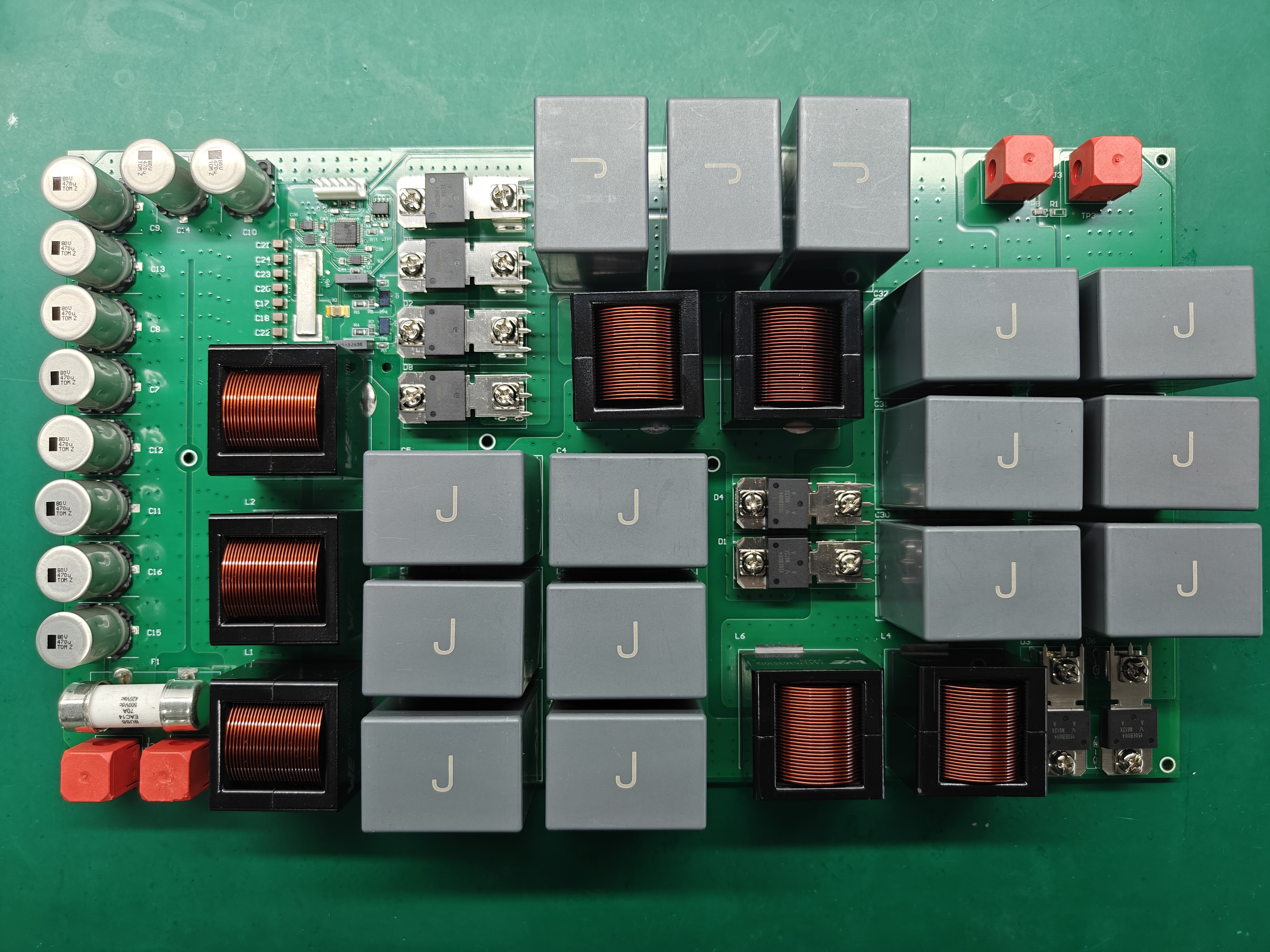
Actual prototype image3.2 kW hardware ready
01Institutional incubation
02Startup registration
03Patent & PCT filings
04Simulation validation
053.2 kW prototype ready
Public website content stays high-level and investor-safe. Deeper documents can be shared through screened data room access.
Incubation
IITG TIC Incubated
Built within a recognized technical incubation environment connected to IIT Guwahati's innovation ecosystem.
Startup India
Startup ID: DIPP229944
Registered under Startup India, supporting formal investor diligence and institutional conversations.
IP Progress
Patent & PCT Filed
The Voltage Adder Cell architecture has moved into IP protection, with Indian patent under examination and PCT application filed.
Simulation
> 98% Simulation Efficiency
Simulation validation indicates high conversion efficiency potential under modeled VAC operating conditions.
Prototype
3.2 kW Prototype Ready
Prototype hardware is ready at the 3.2 kW class, with a 5 kW platform under development for the next power stage.
Market opportunity
Built for EV Platforms Where Voltage Headroom Becomes a Business Problem
VAC is positioned around a practical drivetrain constraint: maintaining usable voltage headroom as motor demand rises. That makes the opportunity especially relevant for EV platforms balancing cost, performance, range, and compact packaging.
Performance Pressure
EV platforms need stronger high-speed, uphill, and heavy-load operation without simply oversizing the battery and motor stack.
Power Electronics Demand
As vehicle platforms mature, compact power-stage improvements become a practical route to better drivetrain behavior.
Platform Scalability
A modular voltage-adding architecture creates room for future variants across different voltage and power classes.
Application focus
India-first, globally relevantFrom EV drivetrain bottleneck to platform-level expansion.
01
Electric two-wheelers
High-volume EV platforms where cost, packaging, and acceleration matter.
02
Three-wheelers and city mobility
Frequent load changes, gradients, and stop-start operation.
03
Light commercial EVs
Higher payload and duty-cycle demands where torque consistency matters.
04
Industrial power modules
Future power-electronics use cases beyond vehicle propulsion.
Commercialization path
01Simulation validation
023.2 kW prototype ready
03Archon deployment planned
045 kW platform underway
Roadmap & prototype timeline
From Validated Concept to Pilot-Ready Hardware
The next chapter is execution: convert simulation-backed architecture into prototype evidence, then use measured performance to support pilot discussions and platform expansion.
01
Simulation Validation
Use simulation results to confirm the VAC operating logic, voltage addition behavior, and conversion efficiency potential.
02
3.2 kW Prototype Ready
Move from architecture and simulation into ready prototype hardware suitable for bench-level technical validation.
03
Bench Testing & Performance Review
Measure voltage headroom behavior, thermal response, conversion performance, and operating stability under controlled loads.
04
Archon Deployment Planned
Initial 100-unit deployment planned with Archon Motors as a pilot-readiness pathway.
05
5 kW Platform Under Development
Translate 3.2 kW prototype learning into the next 5 kW power-stage platform and future modular variants.
ConceptPrototypeBench validationPilot pathway
Investor access
Ready to Review the VAC Investment Case?
Basumatary Power Tech is opening conversations with screened investors, technical collaborators, and pilot partners interested in next-generation EV power electronics.
Screened diligence
Investor Brief
Download a public-safe summary for quick context before a call.
Investor Deck
Review the investment narrative, company stage, and VAC platform opportunity.
Technical Discussion
Explore pilot fit, powertrain constraints, and collaboration potential.